
热门搜索: 拜托小姐
昨夜星辰
American teacher takes jar of sand as symbol of shared ground in forest he helped grow in China_我的网站

A |
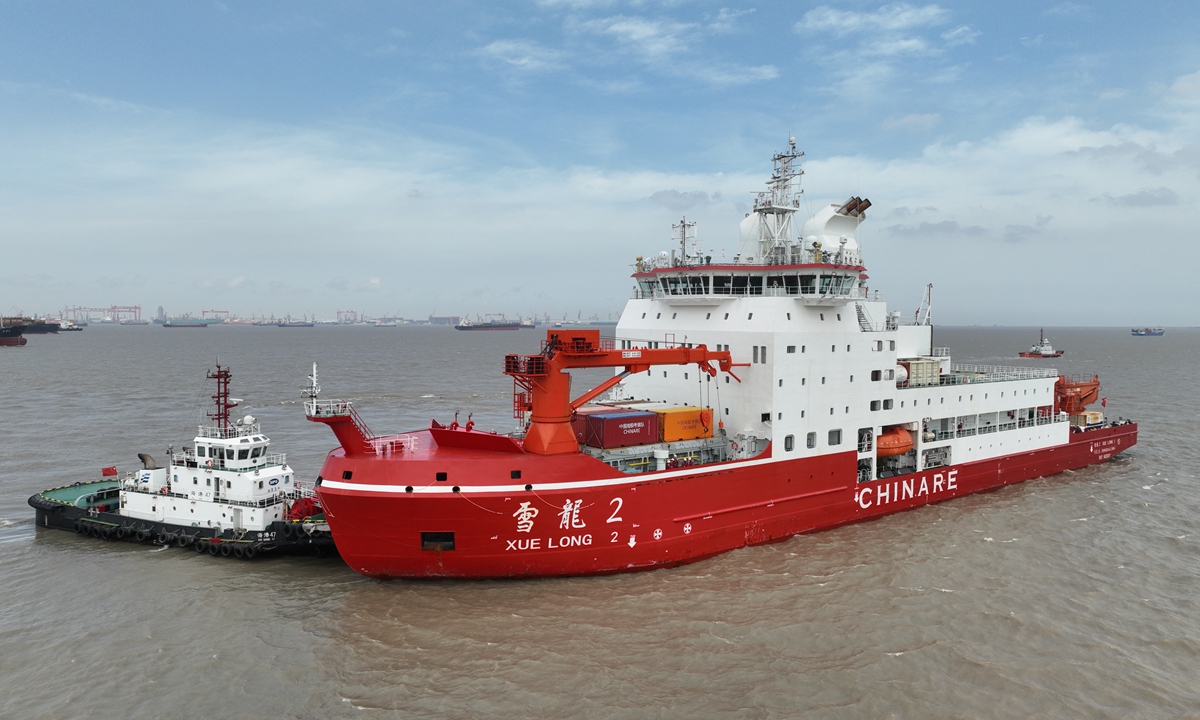
After completing the first stage of comprehensive ocean station surveys on Friday, Xuelong 2 sailed toward higher latitudes and selected a large, relatively flat piece of sea ice about 1.5 meters thick in a densely packed ice zone for its first ice station.
According to Lin Long, captain of the Xuelong 2 sea ice team, the ice station survey conducted by the vessel during this voyage will include six short-term ice stations and one long-term ice station, the Xinhua News Agency reported Sunday.
More than 20 types of scientific operations will be carried out, including the deployment of expendable ice-based buoys, snow and ice-core sampling, under-ice water sampling, sea-ice remote sensing, atmospheric profiling and under-ice oceanographic observations.
Lan Musheng, assistant to the chief scientist of the expedition, said the researchers will comprehensively monitor changes in parameters related to the atmosphere, sea ice, upper ocean and ecological processes beneath the ice as the sea ice melts.
The observations will provide scientific data for studying the rapid changes in Arctic sea ice, the mechanisms behind those changes and the evolution of Arctic ecosystems.
The ice station work is part of China's 16th Arctic Ocean scientific expedition, which was organized by the Ministry of Natural Resources. The expedition set sail from Dalian, Northeast China's Liaoning Province on July 3.
The mission is being carried out by four vessels - Xuelong, Xuelong 2, Jidi and Tansuo-3 - and is expected to be completed in early October.
The expedition is focusing on comprehensive surveys of sea ice, hydrology, biology, ecology and the atmospheric environment in key areas of the Arctic Ocean.
The two icebreakers Xuelong and Xuelong 2 will work together on the ice station surveys. Xuelong completed surveys at 12 ice stations on Friday.
Lin said the ice station locations planned for Xuelong 2 will work in coordination with those of Xuelong to form an observation array.
The arrangement will allow researchers to more deeply investigate the interactions among the atmosphere, sea ice and ocean in the central Arctic Ocean amid rapid environmental changes, as well as their coupling effects with the ecosystem.
The expedition is being conducted against a backdrop of rapid changes in the Arctic environment.
When the mission was launched in July, expedition leader Wang Jinhui said that global warming was driving rapid and profound changes in the Arctic natural environment, with trends such as sea-ice melting intensifying.
The expedition is therefore designed not only to monitor environmental changes but also to investigate frontier scientific questions, including the dynamic evolution of the oceanic crust.
Working on sea ice also presents significant safety challenges. Low temperatures and complex ice-surface conditions can pose risks to researchers, while polar bears are considered the biggest safety risk during ice station operations.
The expedition team has therefore formulated specific bear-prevention and emergency response plans and equipped personnel with various types of bear-deterrence equipment and emergency supplies to ensure their safety.
。
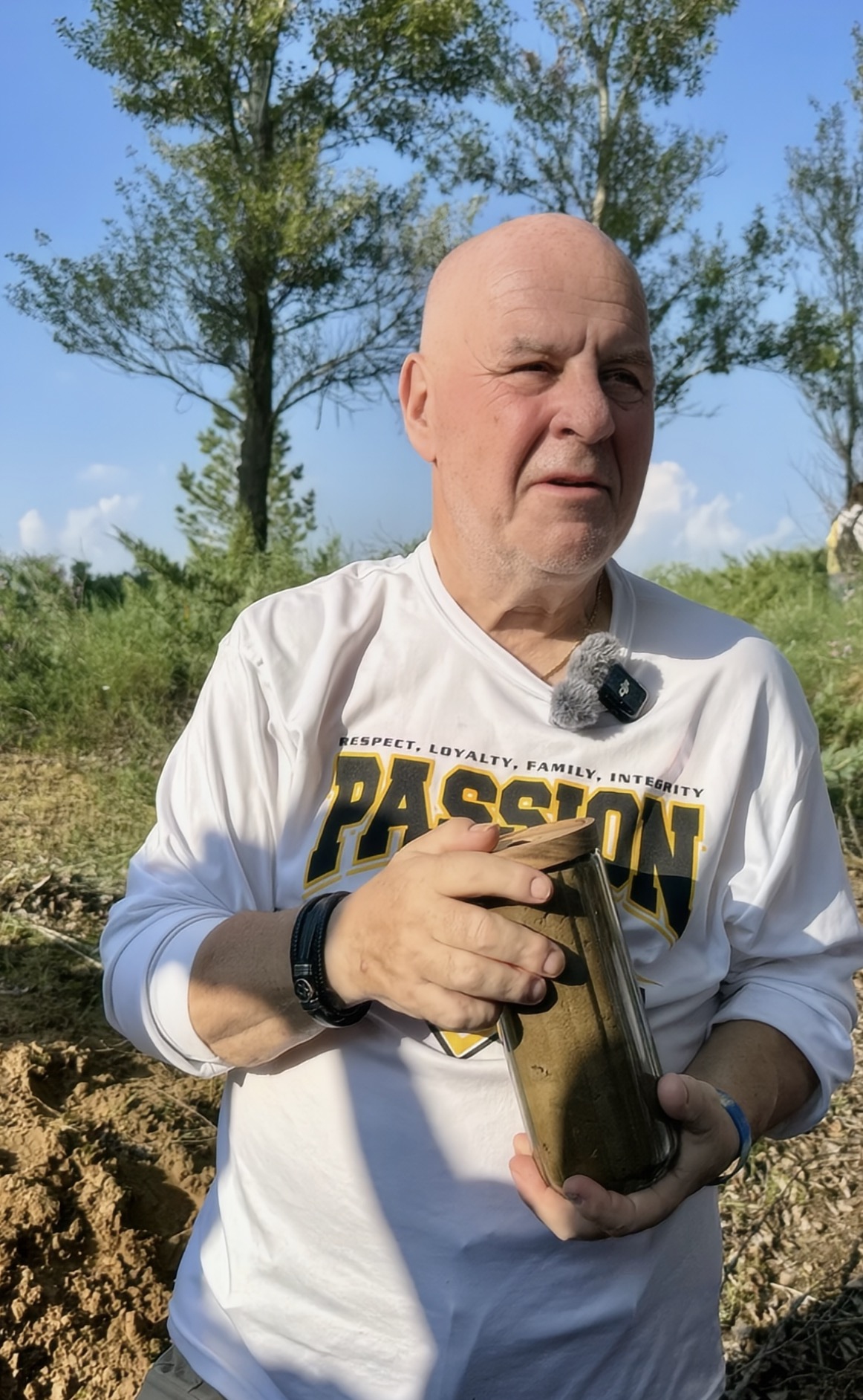
On Monday afternoon, Ronald Sakolsky, an American teacher, set foot once again on the soil of the Mu Us Desert, in the Uxin Banner of Ordos, North China’s Inner Mongolia Autonomous Region. He first came here in 2000. Back then, the land was little more than drifting sand. Today, it is green with trees – a transformation driven by decades of local effort.
He stood within Sakolsky Forest, a woodland formally named to honor his early donation toward local ecological restoration. There, he carried out a plan he had held long before this trip: filling a jar with sand from the desert to bring home to the US.
More than two decades ago, sand was the one thing this place had in abundance. In 1999, when Sakolsky arrived in China as a participant in a bilateral teacher exchange program, he was moved by the tireless efforts of Chinese desert fighter Yin Yuzhen and her husband to curb desertification in the Mu Us Desert. He raised $5,000 – equivalent in 1999 to three years of income for Yin’s entire family – to fund their local tree-planting initiative.
The young saplings bought with that donation have since matured into more than 50,000 full-grown trees, transforming the once desolate, sandy wasteland into a thriving green landscape.
When Sakolsky met Yin at the airport on Sunday, 26 years after his first visit to Inner Mongolia, he joked that he could not take a tree from the Mu Us Desert, but he could slip some sand into his shoes and carry a piece of the land back with him. Now, he had found exactly the sand he wanted – not just any sand, but from a place where persistence had turned desert into life, and where his own name had become part of that story.
“Promise is a promise,” he said. “Ms. Yin made a promise, and she fulfilled it.”
For Sakolsky, the sand is not just dirt. It is a metaphor, a bridge, a shared ground. He plans to tell his grandchildren what it means. “It’s not just a piece of sand in the jar,” he said. “It’s a jar of love.”
He used the jar of sand to symbolize that America and China share a relationship rooted in the same soil. He shook the jar, holding its two ends as if they were the two countries, and said that it shows we’re all on the same planet.
There is an old American joke, he noted, that if you dig a hole deep enough, you will eventually reach China. “We’re all on the same planet,” he said.
Earlier that day, while visiting Yin’s home, he spoke about the need for Americans and Chinese to see each other as family. “All Americans should understand that Chinese people and Americans can be family,” he said. “We can transcend differences if we focus on our common ground. We all love our countries, and we all value loyalty and respect – these are the shared virtues we hold dear.”
As for the sand he collected, Sakolsky said he would treat it as a treasure, alongside all his other precious keepsakes from China. He expects to display it in his living room – a daily reminder of the forest that carries his name and the people who made it grow.
。
Current article:http://q77r6.diaoengngtengdiachanpiezao.sbs/p6n0y/oa8.html
Published on:20:18:07
栏目相关
- 美债最终恐无人接盘?美联储官员重磅警告 加息大门仍敞开
- CD Projekt 在 Gamescom 2026 官方公告中确认 巫师4 将于 2028 年发售
- What are the rules of war? And how do they apply to Israel's actions in Gaza?
- 4预警齐发!浙江、广西、海南岛、广东、福建等局地大到暴雨;台风“紫檀”和“简拉维”路径预测
- Chinese scientists develop ‘brain-reading’ AI model to help predict depression risk, may inspire future emotional-perception humanoids
- 利用职权无偿接受房屋装修,非法收受巨额财物!山东省司法厅原厅长解维俊被公诉
- China’s Pinglu Canal linking Guangxi with ASEAN completes its first full-route patrol, paving way to September opening
- 沃尔夫:安东内利将在蒙扎接受罚退,这是出于争冠的考虑
- Chicago and police union reach tentative deal on 20% raise for officers
- 我的AI新搭档丨④ AI走进课堂 赋能教学新活力
- 탄천물재생센터 부지, 용산공원 대안으로?
- 最高法发布海洋生态环境司法保护典型案例
热门排行
- More than 40 People Found Dead in Tractor Trailer in Possible Human Smuggling Case
- 福建最长普通公路跨海大桥预计年底建成通车!一批交通项目迎来新进展
- 拒绝2年合同,威少啊威少,本可以不退役的?
- NASA资助18个前沿概念研究,含月球熔岩管探测、土星环探测等
- 大阪マラソン出場の20歳人気アイドル ラスト1キロで救急搬送「脱水症状で意識なくなり、そのまま救急車で」と報告
- 演唱会门票未核销,本人愿承担手续费被拒退票
- 2026年期货手续费收取介绍说明:附期货手续费优化降低攻略
- EA888发动机制造偏差引发大众汽车海外大召回 7.4万台车中招
- 【园所动态】卫生保健护成长,质控督导促提升——-长沙市开福区钱隆世家幼儿园、钱隆幼儿园迎接托幼机构卫生保健质量控制检查
- 世界杯之后,卡塔尔怎么样了?
- 预约领满额成长福利!《魔域口袋版》8.21新服重磅开启
- गुमला में ट्यूशन पढ़ाने के बहाने बच्चों को दी जा रही थी बाइबल की शिक्षा, बजरंग दल ने जताया कड़ा विरोध